

This post was written by Elinor Baker and Sinead Rhodes
Do you feel instantly happier after spending time with a dog? A recent article in the Daily Mail has suggested that spending time with dogs can even slow down aging, especially in women. But as with many stories, the truth turns out to be a little more complicated.
The article appeared under the eye-catching title, “Woman’s best friend! Spending time with dogs slows ageing in women, study finds.” At first glance, it sounds like an easy way to prevent aging. But when you look beyond the headline, you discover that the study wasn’t about anti-aging creams or dog walks at all. It was about something far more meaningful: helping women military veterans recover from trauma.
In the study, 28 women veterans with PTSD were split into two groups. Half volunteered to train service dogs, while the other half watched videos of dogs being trained. Both groups showed improvements in their mental health, with reduced symptoms of PTSD, depression and anxiety. The researchers also found that women who spent an hour a week with a dog showed increased telomere length. Telomeres are structures which protect DNA from breaking down and their length is sometimes used to measure biological aging. Increased telomere length therefore suggests slower aging.
The research only included female veterans, which are an under researched group, and found that the mental health benefits were greatest for women with combat experience. It’s unlikely then that the same results would apply to the general population, despite what the headline suggests.
Also, although telomere length can be used to estimate biological age, it’s more like one piece of the puzzle and doesn’t give a full picture. To estimate biological age scientists use a combination of measurements to get a more accurate result.
So, what does the wider research say?
There’s plenty of evidence that spending time with animals can be good for your mental health. Being around animals can reduce stress, symptoms of depression and anxiety and have been shown to help people with schizophrenia and bipolar disorder.
Overall, it’s unlikely that hanging out with your dog will literally slow down aging, but it can make you feel better. While the Daily Mail article did highlight an interesting piece of research, it dressed it up with a misleading headline. So, if a headline catches your eye, it is always worth reading a little further to get to the truth of the story. What the study really shows is that spending time with animals could be a valuable way to support mental health, especially for women veterans who are often forgotten. So, beyond the catchy headline, the real takeaway is that animal connection may hold important clues for improving wellbeing in the future.

This post was written by Lexie Lei and Sinead Rhodes
Have you ever been told that the secret to losing weight is just to “cook more and avoid processed food”? It sounds like an easy way; just ditch the packaged meals and the kilos will take care of themselves. But could it really be that simple? Let’s look at what the study actually found, and how the media told the story.
That’s the message that came across in a recent piece in The Guardian. The article told readers that people who took part in a study lost about twice as much weight on a minimally processed diet compared with an ultra-processed one. It suggested that how food is processed might be the key to whether the weight comes off or not.
The tone felt friendly and practical, almost like advice from a health-conscious friend telling you to cook more from scratch. But the media didn’t spend much time on how the study was actually done, or what the numbers really mean in everyday life. That’s where things get more interesting.
The study behind the headlines was led by University College London and published in Nature Medicine. A group of 43 adults agreed to let researchers plan every meal they ate for two eight-week periods. For part of the time, most of their food was minimally processed, like oats, vegetables, and lean meat. For the other part, most of their food was ultra-processed, like ready meals, packaged cereals, snack bars, but still designed to meet NHS healthy eating guidelines.
On paper, the two diets looked very similar: the same calories, fat, sugar, and fibre. By the end of the period, there was a small difference in scales. On the minimally processed plan, people lost about 2% of their body weight; on the ultra-processed one, about 1%. For someone who weighs 90 kilos, that’s roughly 1.8 kg versus 0.9 kg over eight weeks, a difference of around one bag of sugar.
Why might that happen? People eating less processed food tended to feel fuller and ate fewer calories overall, but researchers did not claim that food processing directly causes weight gain.
There are also details the media didn’t mention. “Ultra-processed” is a very broad label under the NOVA system, covering everything from fizzy drinks to fortified breakfast cereals. In this study, many of the ultra-processed options were still nutritionally balanced. And this was a short, tightly controlled trial with free meals in boxes. It is very different from standing in your kitchen wondering what to cook after a long day.
Other outlets told the story in their own way. ITV News spoke to people in the trial who said they slept better and had more energy after cutting back on ultra-processed foods. That made the piece feel hopeful and human, even though the headline still suggested weight loss “speeds up”. The Science Media Centre used experts to stress the short trial, and the British Heart Foundation offered advice and noted that ultra-processed foods can fit a healthy diet.
Comparing these sources shows how tone and framing shape our understanding of science. ITV News made the story personal and upbeat, Science Media Centre focused on evidence and caution, and British Heart Foundation put it into a public-health context. Reading across them helps reveal both the excitement and the limits of new research.
It’s tempting to take headlines as simple advice: “avoid all processed foods.” But that’s neither realistic nor necessary. Both diets in this study were healthy. What matters most is the pattern, including balance, variety, and mindful eating, not whether something came from a packet.
This study adds a useful piece to the nutrition puzzle but doesn’t rewrite it. Less-processed foods might help, but no single trial offers the full recipe for good health. As always, it pays to read beyond the headline.

This post was written by Izzy Adler and Sinead Rhodes
Recent reports and social media panic have sparked concern about the potential carcinogenic risks of talcum powder. The BBC’s recent story detailing a large-scale court case against Johnson & Johnson (J&J) over the risk has further raised public concern through its definitive language. However, as is often the case, you will have to go beyond a sensationalised headline to find the substance of the report.
A closer examination of the article and evidence reveals a more nuanced and complex relationship between talcum powder and cancer. To understand this issue, it is essential to understand carcinogens and where they can be found. A carcinogen is a substance that has the potential to cause cancer.
The International Agency for Research on Cancer (IARC) classification system provides a framework for evaluating the carcinogenic risks of different substances. Talc has been classified as “probably carcinogenic to humans” (Group 2A). It is important not to misinterpret the classification; this does not mean you will ‘probably’ get cancer.
It means that while there is some evidence suggesting a possible link between talcum powder and cancer, the evidence is not yet conclusive. The IARC classification of talcum powder as “probably carcinogenic” considers both the potential risks associated with asbestos-containing talc and asbestos-free talc.
The BBC article explains that the basis of the court case is J&J’s alleged long-term knowledge that their talcum powder contained asbestos, a carcinogen. We cannot comment on whether J&J knew about the asbestos; that is up to the courts.
However, if contamination did occur, it could have happened when the Talc mineral was extracted from the earth, because asbestos is often found near Talc. However, most modern cosmetic and pharmaceutical companies are careful to use asbestos-free talcum powder, and the risk of asbestos contamination is relatively low.
Some studies have suggested a possible link between using asbestos-free talcum powder on the female genital area and ovarian cancer. These findings are not universal and are often based on small sample sizes. A 2024 review of the evidence by the IARC concluded that “the evidence for a carcinogenic effect of talc in humans is limited”. This suggests that while there may be some evidence to suggest a link, like our other articles on coffee and red meat, evidence is not yet strong enough to confirm that talcum powder is the cause of the cancer.
We know that asbestos-containing talc is a carcinogen, but we’re still unsure about the potential cancer-causing effects of asbestos-free talcum. More research is needed to fully understand the relationship between uncontaminated talcum powder and cancer, and to determine whether asbestos-free talc poses a significant cancer risk.

The question of a relationship between acetaminophen (paracetamol/tylenol) and autism has received a lot of attention in the media and social media. Many health focused organisations have commented on the evidence or lack of evidence for the link but I have seen very little coverage of the actual research studies behind this discussed link. So here is an overview of some key studies.
The link between acetaminophen and autism did not come out of nowhere. There are multiple studies that have shown a link between the two. But this is where we need to be cautious. There can be a link between two items, including a statistically significant association, but that does not necessarily mean one causes the other.
A classic example is the relationship between ice-cream and sunburn – the more sunburnt people get the more ice-cream is eaten. But eating ice-cream didn’t cause the sunburn – it was caused by another factor that influences both of them occurring – it being summer. When another factor can explain a relationship we call it a ‘confounding’ factor in research. This highlights why we always have to be cautious when interpreting findings unless all potential factors have been controlled or accounted for in some way. Read our top tip guide for information on correlation and causation.
When we look at studies that have examined acetaminophen and autism it is clear that the studies cannot rule out other factors that may be explaining an association found. A recent study of 2.5 million children in Sweden showed that use of acetaminophen by the mother in pregnancy was associated with a marginally increased risk of autism, ADHD (Attention Deficit Hyperactivity Disorder) and intellectual disability. But when the researchers conducted ‘sibling control analyses’ the association disappeared. Doing this type of analysis on full siblings means that the researchers can control for characteristics related to the family that may be impacting the findings. We know that autism and ADHD run in families. This means children who are autistic or have ADHD are more likely to have a parent who has one or more of these conditions than you would see in the general population.
There is evidence that mothers who use acetaminophen during pregnancy reported higher prevalence of multiple health conditions that are associated with autism and ADHD in comparison to mothers who did not take acetaminophen. The answer it comes back to then is that autism and ADHD runs in families. There may be several confounding factors explaining the link rather than the actual acetaminophen itself such as mothers who are autistic or have ADHD being more likely to take this medication. Factors associated with being autistic or having ADHD such as increased risk of migraine means they may take more medications like acetaminophen.
The studies on this topic have shown inconsistent findings – some finding links between acetaminophen and autism and ADHD and others not. This suggests sample differences between the studies at least in part influencing the study outcomes. It is also important to note that historically women have been late diagnosed, mis-diagnosed and often completely missed for autism and ADHD diagnoses. This means these study samples likely have mothers with higher rates of these conditions than is reported.
Another set of researchers recently published a review on this topic. They took a cautious critical approach to reviewing the literature. They also found the familial confounding effect when controlled for through sibling analysis as described above. They also identified significant biases within studies such as the way the samples were selected to take part in studies.
Bottomline is we know that autism and ADHD run in families. These conditions have not appeared out of nowhere over the last decade or so as we are seeing media reports of. There is much better awareness of these conditions especially in girls. And with early support crucial for long term developmental outcomes including education, having a job, wellbeing and mental health it is critical we focus our energies on supporting these families and all those who care for these children, young people and as they grow in adulthood.

“What happens to your face if you don’t get 7 hours of sleep a night”
This post was written by Gaia Mizzi and Sinead Rhodes
A recent article by the Daily mail warns that getting less than seven hours of sleep leaves you with brittle nails, a bloated belly and blotchy skin, utilising AI generated images to show just how terrible you might look after a few rough nights. But how much of this is actually backed by science and how much of it is sensationalism?
Firstly, the article reports from a study performed by SIMBA, a bed & mattress company, where they surveyed “2175 adults about their sleep habits, health and overall appearance.” They reported that 1 in 4 participants had sensitive skin and were overweight, with additional stats like 32% reported bloating. Overall message = If you don’t get at least 7 hours sleep, you’ll ‘look terrible.’ While there’s no doubt that a good night’s rest is crucial for skin health, metabolism and overall well-being, is it really as simple as: seven hours of sleep = great face and health ? So while the science discussed in the article, about cortisol, blood flow and metabolism is rooted in scientific reality, the article neglects to mention the myriad of other contributing factors like diet, lifestyle and genetics.
Ignoring the sensationalism created by using AI to generate fear based visuals, the article does not report the massive conflict of interest where a mattress company creates ‘studies’ that demonises a bad night’s sleep and who happen to sell the solution.
The same author penned a second article, seemingly aimed at older people, discussing the effects of sleep deprivation on facial aging. Simbas AI generates a different set of images, specifically to showcase signs of aging like eyebags and wrinkles. Similarly the same misrepresentations about contributing factors and the questionable use of AI throughout hammers home the point that these articles are not trying to educate about healthy sleeping habits but rather scare the public into investing in Simbas products.
So in conclusion, sleep is important—not just for how you look, but for your overall health. While this article includes bias and exaggeration, the core message is true: lack of sleep is bad for you. But don’t let clickbait headlines and AI-generated scare tactics convince you that a few restless nights will ruin your appearance forever. There’s always more to the story, with real health risks that go far beyond skin, nails and how your jeans fit in the morning. If you do struggle with sleep, The Sleep Charity, mentioned in the article, is a great resource worth checking out.

This post was written by Meghan Perez-Keepax and Sinead Rhodes
A study, published in the journal Nature Medicine, recently made the headlines due to its findings that there has been an increase in plastic detected in brain autopsy samples. In this blog post, we look at reporting by the Guardian, Washington Post, New York Post and the Independent on this study.
So how did these major news outlets fair with their reporting and how concerned should we be about the study’s findings?
First it was good to see that all four outlets reported the number of brains looked at in the main part of the study (52). The New York Post got this in early in the article. The other three waited until the bottom half i.e. the part that a lot of readers never get to.
Why does this matter? Because this is a small study where the individual results vary a lot. This causes a lot of uncertainty.
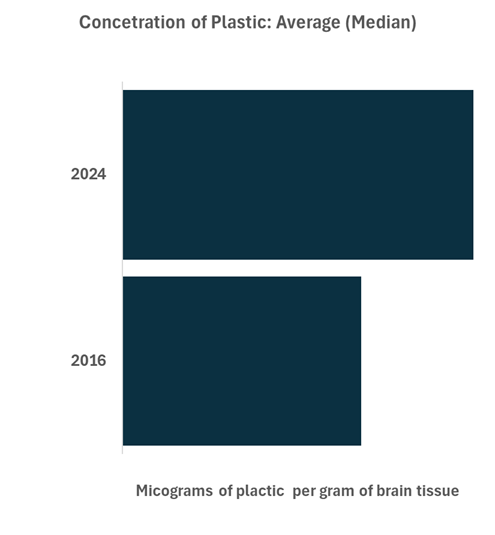
The Guardian, Washington Post and New York Post all reported an average increase of 50% in plastic between the 2016 and 2024 brains. This number is correct and, without context, sounds pretty dire.
We are very certain that the 2024 cases were drawn from a real-world pool that is on average higher than the 2016 one. However, we cannot confidently say how big the difference is. 50% is the current best estimate but the real-world impact could be drastically different. In short, more data is needed.
The Guardian chose to double down on emphasising the 50% increase by showing it in a long thin graph. The following are the same numbers charted using different dimensions and give quite different impressions at a quick glance.
Long thin graph:

Short wide graph
The Independent took the opposite approach, avoiding statistics altogether and describing the trend as “substantially higher”. This again underplays the level of uncertainty.
A separate part of the study looked at brains with dementia and found they had clearly higher concentrations of plastic. Here the Washington Post showed excellent reporting:
“Patients with dementia have weaker blood-brain barriers, they warn, and have a harder time clearing toxins from the brain. In human brains, therefore, the high numbers of microplastics could be an effect of dementia or Alzheimer’s, rather than the cause.”
The Independent and the Guardian both reported that the dementia results do not show a “causal link” which is true, but not particularly clear. The New York Post’s wording that “researchers cautioned that further study is needed to establish a direct link” could incorrectly imply that the researchers expected to discover that plastic caused dementia.
So, should we be worried? The unsatisfying but truthful answer is that, at the moment, we just don’t know. Sometimes scientists need the time and resources to get a clearer picture. The Guardian finishes with a good summary of the situation:
“Prof Oliver Jones, at RMIT University in Australia, said the new research was interesting, but the low number of samples and the difficulty of analysing tiny plastic particles without contamination meant care should be taken when interpreting the results.”
It is clear more research is needed on this important topic.

This post was written by Aine Singleton and Sinead Rhodes
A recent BBC article explored the cost per calorie of various foods, through rising food costs and the challenges this creates for families. However, the BBC article oversimplified a complex issue by linking cheap calories with affordable nutrition. There are powerful stories about how food insecurity affects many families in the UK, but a closer look into research of the causes of food insecurity is missing.
The BBC article describes the daily struggles of families facing food insecurity, the pressures they’re under and the difficult choices they must make and how this forces them to prioritise cheap calories over nutrition. However, by focusing on calories alone, this article ignores the importance of nutrition. This article could of benefitted from highlighting the issue of hidden hunger as a result of eating high-calorie, low-nutrient foods, or the fact that cheap calories often come at the expense of long term health, potentially causing implications down the line, for example obesity and diabetes.
In fact, the Broken plate report, which the article is based on, examines factors which contribute to food insecurity, such as access transportation and time constraints. The article does oversimplify a complex issue by framing it as a simple healthy vs. unhealthy foods. The Broken Plate Report points out that Healthy options cost £8.44 per 1000 calories while unhealthier options cost £4.88, reflected in the BBC article.
While the article does accurately state that healthy foods can be expensive, it does not mention affordable options such as frozen vegetables and pulses which are both cheap and nutrient rich. These are essential for health but also help keep us feeling fuller, for longer.
Another factor highlighted in the Broken Plate report but skipped over in the BBC article is the marketing of ultra-processed foods to children and young people can have a negative impact on relationships with food and diet.
This media article effectively shows the impact food insecurity has on people in the UK currently. It would of been strengthened by a deeper look into the Broken Plate report which would allow for a more comprehensive look into the many factors which contribute to food insecurity. This issue is more than penny pinching, it is about families being forced to choose cheap calories over nutritious food, leading to hidden hunger and long term health complications.

This post was written by Meghan Lumsden and Sinead Rhodes
Scientists mapped the first complete brain of an adult animal, and it’s smaller than a poppy seed! Led by Princeton University, the FlyWire project involved collaboration from an international team of scientists at over 100 institutions. After five years, they successfully assembled the full picture of a fruit fly’s brain, gaining headline-worthy traction as the most detailed analysis of its kind. Media articles were quick to highlight the significance for our understanding of the human brain — where the applications reach a much larger scale and scope.
FlyWire’s results were published in Nature, sharing a detailed diagram known as the fly ‘connectome’. This provides a visual map of the 50 million wiring connections within the tiny insect’s brain. By studying the networks of neurons and synapses, the researchers started to reveal linkages to complex behaviors from memory to mating. In addition to understanding how the brain processes and acts on information, they’re also interested in understanding how and when things go wrong. Identifying ‘miswiring’ in the brain could potentially help explain neurological diseases, such as Parkinson’s and Alzheimer’s.
However, the human brain has over 600,000 times more neurons than a fly (86 billion vs. 140,000). While the connectome is an excellent model for how a brain works, it’s not indicative of how all brains work. The research has also yet to validate how connectomes may differ between individual flies. The FlyWire project required intense computational assistance from artificial intelligence, and still resulted in nearly 3 million errors that were manually corrected by the research team. AI technology in its current state does not have the capacity to manage the size of the human brain.
Let’s take a look at how this was reported in the news. The BCC said “Fly brain breakthrough ‘huge leap’ to unlock human mind”, immediately jumping to the human connection. ‘Huge leap’ comes from the words of an independent expert in the article, but direct members of the project were also quoted on the transformative potential for understanding the brain. The Guardian leans into this latter angle with “Tiny brain, big deal: fruit fly diagram could transform neuroscience”. The subheader of this article focuses on the connection between wiring and behavior, something that’s not as explicitly mentioned by the BBC. Lastly, we have “The most detailed map of the brain EVER seen: Stunning images reveal all 139,255 neurons – and the 50 million connections between them” from the DailyMail. Here there is an interesting focus on the factual numbers, but the capitalisation of “EVER” seems sensationalist.
Most media articles acknowledge the continued work to be done, with efforts already underway to map the mouse connectome. Overall, these headlines shine a positive and hopeful light on a new scientific development. While this paves the way for future research, it is important to remain grounded in the context that we are still far off from reaching this level of detail and understanding on the human brain. For more advice on analysing coverage of new scientific developments, check out the Research the Headlines list of “How To” tips here.

This post was written by Millie Chambers and Dr Sinead Rhodes
A recent research study that looked at the cause of ‘food fussiness’ in children has gained a lot of traction in the media, both nationally and internationally. How does the coverage of the research compare to the study’s findings and claims?
Researchers, based at University College London, looked at the contribution of genetics and the environment to ‘food fussiness’ at different ages and how this changed over time. They tracked this ‘food fussiness’ trait in 2,400 children (who were a twin) from the age of 16 months up until 13 years old. Food fussiness has been described as the tendency to eat a small range of foods either due to pickiness (for example, on the flavour or texture), or a reluctance to try new foods. It is a relatively common trait and usually develops early in life. This UCL research team found that food fussiness could be largely explained by genetic factors at all ages. However, there was also an environmental influence on food fussiness at all ages, particularly in early toddlerhood. The researchers suggest that children displaying food fussiness could benefit from early interventions throughout their childhood.
Some media outlets used sensationalist headlines when covering this study, such as “Is YOUR child fussy? It’s in their genes!” , “Parents are to blame if child is a fussy eater – but not for the reason you think”. Despite this, many did summarise the key findings in their headlines rather well for example, “Fussy eating in children largely down to genetics research shows” and “Study finds picky eating to be largely influenced by genetics”.
Whilst the study highlights a greater genetic link for food fussiness, the authors also emphasise the role that the environment can play, particularly at younger ages. For example, the amount of exposure a child has to a variety of fruits and vegetables in the home could impact food fussiness. Despite the sensationalist headlines which focus on the genetic component, most of the articles do mention environmental factors and discuss strategies suggested by the researchers that can be used by parents to promote more varied eating in their children, such as having family meals together and offering your child a variety of fruits and vegetables.
Several articles mis-represented the conclusions of the paper by stating “food fussiness is not necessarily a phase children will grow out of” or conversely “picky eating is a largely genetic trait and lasts from toddlerhood to early adolescence”. It is important to mention that the children were aged 16 months when the study started, and 13 years old when it ended. It is not known or discussed in this study whether the children ‘grew out’ of their food fussiness in their teenage years or not. Food fussiness may not just be present “from toddlerhood to early adolescence” as the study did not investigate past the age of 13 and therefore food fussiness may continue into teenage years. This study provides a snapshot of food fussiness between the age range of 16 months to 13 years old.
A general positive aspect of the media reporting was that most featured quotes from the research team, allowing them to put their findings into their own words. One commonly used quote was by the senior author of the research paper, Professor Clare Llewellyn, “While genetic factors are the predominant influence for food fussiness, environment also plays a supporting role.”. Quotes directly from the authors allow the research teams to describe their research in a way that might not be used in their published research, and can be a good way of ensuring the research findings are correctly presented. You can read more on the importance of quoting researchers in the media here.
In the reporting of this study, it was nice to see the reassurance to parents that food fussiness is not down to ‘poor parenting’, and is what the authors wanted parents to take away from their findings. Some reporters went into further detail by providing hope to parents, quoting one of the research study authors who said “genetics isn’t destiny” and that these behaviours aren’t necessarily fixed – strategies can be put in place to encourage varied eating.
For more information on food and eating in children and young people please see another free to access blog post on this topic: https://epicthinklearn.com/how-can-i-support-my-neurodivergent-child-with-eating/

A recent research study looking at diet and dementia risk has received a lot of attention in the media. What did the researchers examine and how did the media cover this?
The researchers, based at Queen’s University Belfast, analysed data from a very large database of over 500,000 participants. They looked at the relationship between food and drink high in flavonoids and dementia risk. Flavonoids are compounds found in plant-derived foods and include many fruits, vegetables, dark chocolate, tea and red wine. They found that those with a diet rich in flavonoids had a lower risk of dementia overall as a group. Researchers believe that flavonoids could have a protective effect on brain cells, helping to block the build up of plaques associated with dementia. The reduction in dementia risk was particularly in strong with people who had a high genetic risk of dementia, or who had hypertension or depression symptoms.
There were some very sensationalist headlines in the media coverage of this study including “increase your intake of red wine, tea, berries, and dark chocolate to reduce dementia risk, scientists say” , “why you should be enjoying red wine, berries and chocolate to stave off dementia” and “new study reasserts red wine helps reduce dementia risk”. This last headline was published in a alcohol business magazine. When we look at the published paper that reported this study it quickly becomes clear that it was one serving of red wine per day that was associated with a lower dementia risk. Over the years we have continually seen headlines written for clickbait like these including one about consuming cheese and wine and brain health and another that asserted that drinking a bottle of wine a day is better than not drinking alcohol at all.
What was really good to see in the reporting was many articles mention the strongest findings for those with a high genetic risk of dementia, or who had hypertension or depression symptoms. This is important information for those groups of people and such extensive and accurate coverage is very good to see. May of the media reports also included statements from the research team who conducted the study and some also included the views of other researchers. If you are a regular reader of our blogs you will be aware that including these statements is an important sign of identifying the accuracy of a media article. Our broader set of top tips are here!

Written by Francesca Hearn-Yeates, PhD Student at the Centre for Reproductive Health, University of Edinburgh, and Dr Sinead Rhodes, Senior Research Fellow at the Centre for Clinical Brain Sciences, University of Edinburgh.
Polycystic ovary syndrome, known as PCOS, is a highly common condition, yet one that we still know relatively little about. PCOS is a condition associated with abnormal hormone levels, leading to symptoms including irregular periods, excessive hair growth, acne, and weight gain. It is estimated to affect around 1 in 10 women (or those assigned female at birth) in the UK.
A recent study into PCOS has been discussed in the media looking at the association between a diagnosis of PCOS and risk of suicide. The Guardian and The Daily Mail have both published articles about the study.
The first issue here is that a common (understandable) misconception of PCOS, that it is diagnosed by cysts on the ovaries (a trap that The Guardian fell into). Although women with PCOS can have cysts on their ovaries, so can lots of other women, and these cysts are not necessarily an issue, many of us carry on never knowing we have them. In fact, the ‘cysts’ they identified in the ovaries of women when they named it ‘polycystic ovary syndrome’ are not cysts at all! More recent research has identified that they are in fact ‘paused’ follicles (pre-egg cells).
Now, I know you are thinking, what on earth do you mean by ‘paused follicles’ but let me explain. Usually, during the menstrual cycle, various hormones fluctuate, and these fluctuations cause the follicles in the ovaries to mature into egg cells. Once they have matured, the hormones in the next stage of the menstrual cycle will prompt them to move down the Fallopian tube and into the uterus. However, in people with PCOS their hormones do not always behave as they should, meaning they do not always go through a full hormone/menstrual cycle. Their hormones can cause the follicles in the ovaries to grow but they never get the hormonal trigger to send them off down the Fallopian tube. As a result, they get a build-up of ‘paused’ follicles in the ovaries, which under the microscope can look a bit like cysts!
So, onto the media coverage of the studies. Both The Guardian and The Daily Mail articles did a good job of picking out the key results from the study into the association between PCOS and suicide risk and mentioning the methodology used. However, The Guardian incorrectly stated that data was used from ‘8,960 women and girls’, rather than 18,960, which could downplay how much impact this study could have. The Daily Mail states that ‘a third of infertility cases are linked to PCOS’ without any reference to where they sourced this data. Not referencing where they have sourced this information means we do not know if it is a valid statement. Additionally, this could lead PCOS patients reading the article to worry about their fertility, without providing any supporting evidence or websites for further information.
A key aspect of this study is that it is looking at population data, taking the population who have been diagnosed with PCOS and comparing their suicide risk to the rest of the population. Therefore, it cannot be stated whether this is a cause-and-effect relationship, or simply a correlation. A correlation would mean that although there is an association between PCOS and suicide risk, there could be a third factor (or many other things, such as lifestyle or environmental factors) that are influencing both PCOS and suicide risk, rather than the two having a direct impact on each other. These limitations are touched upon in The Guardian article, but no potential cautions are mentioned by The Daily Mail.
Both articles were successful in conveying the primary take-home messages from the study. The Guardian finished by highlighting the importance for further research into PCOS and with links to helplines for those struggling with mental health. This is a really important part of an article on such a sensitive topic.

Over the past few months there have been reports by the BBC, Guardian, and Sky News, covering a potential “breakthrough” treatment for cervical cancer, which is based on chemotherapy drug treatments that already exist.
In the UK, immunisation programmes against the human papilloma virus (HPV) infection, are used as a public health measure to lower the number of cervical cancer cases arising from HPV infections. Smear test campaigns in women aged 25-64 years are used to diagnose early changes in the cervix.
Cervical cancer – the fourth leading cancer impacting women worldwide – was diagnosed in up to 604,000 women in 2020, with relapse occurring in 2/3 women after receiving radiotherapy as the standard treatment. These statistics highlight a real need for new safe and effective treatments for cervical cancer.
Research funded by Cancer Research UK (CRUK) at multiple NHS hospitals has attempted to discover new treatment combinations for treating patients with cervical cancer. The researchers focused on using chemotherapy medication before starting patients on radiotherapy. The goal of this research was to prevent the spread of cervical cancer and improve patient survival.
What did the study involve?
The clinical trial investigated two chemotherapy treatments, cisplatin and carboplatin, that are currently prescribed for other cancers. The team divided patients into two groups with an equal number of patients receiving either cisplatin or carboplatin treatment before radiotherapy (250 women). There was also a second group of patients receiving the current standard treatment of radiotherapy only (250 women).
What did the researchers conclude?
One of the key findings from this clinical study was that patient survival without developing further cancer, increased from 64% in patients receiving the current standard radiotherapy treatment to 73% in patients treated with chemotherapy before their radiotherapy, representing better outcomes. After five years, 80% of the patients treated with the combined chemotherapy and radiotherapy survived, compared to 72% of those who received radiotherapy only. The conclusions from this research were that all patients should be prescribed both chemotherapy and radiotherapy for the treatment of cervical cancer. Another positive aspect of this study was that the chemotherapies tested are available and accessible in developing countries, making these findings globally relevant to all nations.
How did the media cover this study?
Since its publication, at the time of writing, the BBC, Guardian, and Sky News are the main outlets reporting the findings from this clinical investigation. The headlines summarised the key finding from the study, highlighting the potential for these chemotherapies to improve outcomes in patients with cervical cancer. The BBC coverage of this study under the heading “Biggest cervical cancer drug advance in 20 years hailed”, provided a balanced overview of the study based on the presented statistics from the clinical trial.
Media coverage of this clinical trial through all media channels was well-balanced and included quotes from the clinical researchers involved in the study. These quotes were generally in agreement that the conclusions from the study seemed reasonable. The Guardian quoted the lead investigator from University College London (Dr Mary McCormack) in their coverage, hailing the findings in the trial as the biggest improvement in over 20 years. The BBC coverage of this trial quoted the executive director of research and innovation at Cancer Research UK (Dr Iain Foulkes) who highlighted the importance of administering chemotherapy and its timing, to improve patient outcomes.
A limitation of the BBC, Sky News and Guardian coverage of this study was that while they reported the type of side effects experienced by patients, they did not communicate the percentage of patients experiencing side effects from the new combined chemotherapy and radiotherapy treatment. In the original study, up to 59% of patients being treated experienced serious side effects from the treatment. Another limitation of the media coverage by all reports, was that their conclusions were very broad and suggested these findings applied to all cervical cancers, whereas cervical cancer has many different stages. However, they did imply this by mentioning that not all patients receiving the new treatment would necessarily respond to this ground-breaking finding.
Conclusions
Overall, media coverage of this publication was carried out in an objective manner and with a good balance of interpreting the science and presenting quotes from researchers and cancer organisations. In terms of the publication, the clinical study reported is one of the largest studies of its type, meaning that the findings from this trial are applicable to a large number of patients with cervical cancer. Women’s health, and specifically cervical cancer remains under-researched, so findings from this research will be useful in paving the path for future work investigating new treatment options for gynaecological cancers.

Three different treatments for Alzheimer dementia (dementia caused by Alzheimer disease) have recently – or may soon – hit the market: Aducanumab, Lecanemab, and Donanemab. This has led to an excited media frenzy with much talk of ‘historic moments’ and ‘breakthroughs’.
These include:
- A quote from the Daily Mail – “’Historic moment’ in race to beat Alzheimer’s: Experimental brain plaque-busting drug ‘significantly slows decline of patients battling early stages of the disease’” (28/09/2022)
- The Guardian said – “Success of experimental Alzheimer’s drug hailed as ‘historic moment’” (29/09/2022)
- Another Daily Mail article – “Experimental Alzheimer’s drug made by Elli Lily slows cognitive decline by 35% and FDA will look to approve it this summer” (03/05/2023)
- And the Daily Mail again – “Is this the ‘beginning of the end’ of Alzheimer’s suffering? Breakthrough drug signals ‘treatment era’ for memory-robbing disease… but experts warn the NHS is ‘not ready’ to dish it out” (04/05/2023)
In many ways this excitement is understandable, as dementia – of which Alzheimer disease is the most common cause – is increasingly common, yet many people have the view that little can be done about it. Being a complicated topic means details are often missed out in the media reports, but I will do my best to address these here. The accuracy of these media reports is not helped by the fact that all of the headlines above are based just on the drug companies’ own press releases; the full research data were not made public until December 2022 for Lecanemab and July 2023 for Donanemab.
There is more treatment, care, and support that can be given to someone with dementia than many people think and the NHS, social care, and dementia charities are active in doing this. However, the question raised by these headlines is are these new drugs all they have been cracked up to be?
The truth behind the new dementia drugs
Aducanumab was controversially approved very quickly in America – the clinical trials finished early since they were not looking highly successful – leading to several people resigning in protest. Nevertheless, people in the US now get Aducanumab for dementia, as well as some people in the UK receiving it as part of clinical trials.
Similar events occurred for the US approval of Lecanemab even though, again, the results were not overwhelmingly positive. Lecanemab had been shown to clear the amyloid plaques in the brain that are characteristic of Alzheimer disease – an impressive feat – but unfortunately the actual difference it made was small and there were potentially serious side effects – plus, there was less evidence that the drug worked in women*; to my knowledge, this last point has never been reported in the media. This gives me the impression that, despite the effects of the drug on the brain, it did little or nothing positive to the person.
Finally, a similar process has followed the findings about Donanemab. Major headlines preceded the presentation of the full results (see above), as has been the case for all these drugs. This drug seemed to work in both men and women, but again only made a small difference to the person and had similar serious side effects.
How the findings are presented can make them look more impressive
In addition to the media often relying on research that has not yet been evaluated for their stories, the data they present are often relative effects, meaning the findings are described ‘in comparison to’ something else. For example, one press release said “Donanemab treatment slowed clinical decline by 35% compared to placebo”†, with another stating “Lecanemab treatment met the primary endpoint and reduced clinical decline … compared with placebo at 18 months by 27%”‡ (I have bolded some text for emphasis).
However, when you look at the actual difference between the two groups the results are less impressive. In clinical trials, the people taking a high dose of Aducanumab and the people taking a placebo (basically a sugar pill) BOTH got worse over time, but those on the drug were not quite so bad (less than half a point on an 18-point scale). There was even less difference between those on a low dose and a placebo. The differences for Lecanemab and Donanemab were similarly small, meaning all three drugs are no better than our current treatments, and by some measures only about half as effective.
Importantly, none of these drugs are good enough at treating Alzheimer dementia that another person would be able to detect a change in the person over time compared to someone not taking the drug.
Negative side effects
However, in addition to being no more effective than the current treatments, these new drugs are associated with substantial risks. The main significant side effects are swelling of and bleeding in the brain, both of which occurred in a large minority of participants receiving the drugs (13-31%) and in very few people taking a placebo (<10%).
Conclusion
In the UK, Lecanemab and Donanemab will separately have to be approved before being available to people with dementia. It remains to be seen whether these drugs will be licensed and made available on the NHS, but it seems unlikely that struggling NHS services – mine included – would be able to incorporate them into their current treatment pathways. Given the drugs’ limited effectiveness, huge costs for the drug alone as well as the requirement for multiple expensive scans, and the risk of potentially serious side effects, the question every doctor will have to ask themselves is “would I recommend a relative to take this treatment?”
Helpful links:
Alzheimer Scotland (24 hour Freephone Dementia Helpline 0808 808 3000)
Alzheimer’s Society (Dementia Support Line 0333 150 3456)
Scottish Dementia Research Consortium
The following provide some additional details on the sources of information included in the post above:
* See Figure S4 panel B on page 24 of the Supplementary Appendix to van Dyck et al. (2023).
† Lilly’s Donanemab Significantly Slowed Cognitive and Functional Decline in Phase 3 Study of Early Alzheimer’s Disease. [Press Release, 03/05/2023] The full sentence reads “Donanemab treatment slowed clinical decline by 35% compared to placebo, and resulted in 40% less decline on the ability to perform activities of daily living.”
‡ LECANEMAB CONFIRMATORY PHASE 3 CLARITY AD STUDY MET PRIMARY ENDPOINT, SHOWING HIGHLY STATISTICALLY SIGNIFICANT REDUCTION OF CLINICAL DECLINE IN LARGE GLOBAL CLINICAL STUDY OF 1,795 PARTICIPANTS WITH EARLY ALZHEIMER’S DISEASE. [Press Release, 27/09/2022] The full sentence reads “Lecanemab treatment met the primary endpoint and reduced clinical decline on the global cognitive and functional scale, CDR-SB, compared with placebo at 18 months by 27%, which represents a treatment difference in the score change of -0.45 (p=0.00005) in the analysis of Intent-to-treat (ITT) population.” On this occasion, the press release does also report the absolute change (-0.45 points) but does not state the scale (0-18).

Artificial intelligence (AI) has rarely been out of the headlines in the last couple of years, and particularly since the OpenAI organisation released its ChatGPT service to the public for testing in 2022. Thousands of articles have been written since, ranging from claims of revolutionary change to apocalyptic warnings (most recently culminating in the UK-hosted November 2023 AI Safety Summit). But what actually is “AI”, and how much of this commentary is realistic?
The idea of AI, and some of its core technology, has actually been around since the 1950s, when computing was very young, and versions of it have been around for a long time in relatively basic forms — for example, Microsoft’s “paperclip” Office assistant, or the predictive text feature on your phone. Scientific data analysis has also used AI concepts such as “neural networks” for several decades. These AI systems all have the common feature that they are driven by statistical analysis of data, e.g. your Word document or text message, coupled with some response to recognition of patterns in that data. AI systems have to be trained in this pattern-recognition by exposure to a large volume of example data, so they know which responses are most likely: this training is why in scientific applications AIs are more often known as “machine learning” (ML) tools. The reason we are hearing so much about AI now is a combination of advances in computing power (in particular, hardware for 3D computer games turned out to be ideal for ML training), new ideas for how to implement ML systems, and the explosion of training data from the internet.
These advances have made possible the building of unprecedentedly large-scale “generative” AI systems, trained on vast quantities of data and capable of interacting in a way convincingly similar to human beings. But at their core they are still essentially predictive text (and other media), just an extremely advanced sort. Generative AIs create mash-ups of their input data and, however impressive the results, there is no true reasoning going on. For example, early versions of ChatGPT were notoriously incapable of basic arithmetic if phrased in unfamiliar ways. Updates have added work-arounds to known pitfalls and appear more convincing, but their core is still just based on statistical remixing of the training date. They are therefore not good at innovation, but can be excellent at producing summaries or re-workings of existing formats, such as literature reviews, formulaic reports, forms, translations, and some computer codes. This frames the potential for AI technology to disrupt and potentially damage us: as is often the case with advances in automation there is real potential for generative AI to accelerate or replace repetitive human tasks and jobs, but there is little scope for a “rise of the machines” Terminator-style AI revolt. There have been several push-backs to drives for generative AI use from creative sectors, e.g. the Hollywood writers’ strike, artists whose work has been (usually without permission) used as training input data to image-generating AIs, and journalism.
The most high-profile warning of AI risks came in the form of a “Pause Giant AI Experiments” open letter from the Future of Life Institute in March 2023, famously signed by Elon Musk among thousands of others. However, this and OpenAI’s calls for risk-management of the current state-of-the-art systems — which it (and now the the UK government) calls “frontier AI” — notably shy away from placing regulatory restrictions on industry, and may be driven as much by pre-empting regulation or buying catch-up time as by genuine concern about sentient AI dangers. More immediate risks of generative AI are in public misinformation, through AI-driven social media posting, “deep fake” videos and audio putting words in the mouths of public figures, and poor data inputs or reviewing processes for AI-generated news articles. AI has also become a ubiquitous advertising buzzword: adding an ML component to an app or appliance is very easy and enables claims to be “AI powered”, without necessarily adding any value for users.
This is a rapidly evolving area and we can certainly expect to see social and technical changes driven by AI in the coming years, but — as always — don’t believe everything you read, either human- or AI-generated.

The UK Prime Minister’s recent backtracking on the country’s commitment to several key environmental schemes has brought the topic of green policies back to the top of the news agenda. Much of the focus has been on climate change and the effects of increased temperatures and more extreme weather on the habitability of our planet in the long-term, but it is important to also consider the shorter-term impacts that air pollution can have on human health.
Earlier this year, public health researchers in Belgium and Denmark published separate studies which showed that long-term exposure to air pollution contributed to an increased risk of serious or severe health outcomes in Covid-19 patients. The results of these studies were reported in the Guardian, as well as some more industry-specific websites such as E&T and Eos.
Reporting on the associations and causal effects between pollution and health can be incredibly challenging, but all three articles did a good job of clearly outlining what was actually found within the studies, without any attempt to sensationalise the outcomes. In all cases, a clear effort was made to incorporate aspects of the results in the authors’ own words, which vastly reduces the risk of anything being misinterpreted.
The Guardian article did an excellent job of explaining the wider context around these papers, and in particular provided a nice explanation about the distinction between longitudinal (long-term) studies, which track groups of individual patients, and ecological studies which use data averaged from the whole population. Previous studies on this topic had fallen into the latter category, while the two published here were both longitudinal, and the author did a good job of outlining why these represent more significant and more powerful results. It can be challenging to explain these concepts in a national newspaper, and I felt their explanation was clear and concise without oversimplification or losing any detail.
My only small criticism of this article was the reference to pollution having “aged” patients, something which was included both in the headline and the opening paragraphs. The interpretation behind this statement was not entirely unreasonable, it was based on a finding in the Belgian article that patients who had been exposed to air pollution spent a similar length of time in hospital with Covid-19, as people 10 years older – “These effect sizes…were equivalent to the effect of a 10-year increase in age on hospitalisation duration”. It is perhaps understandable that this line was used in order to give the reader some useful context, but I think the word “aged” could confuse readers about the actual effects of pollution – neither study makes any claim about pollution actually physically aging our bodies.
The other two articles were clearer in their explanation of this part of the results – the E&T author wrote “the size of the effect of air pollution on time spent in hospital was equivalent to the effect of a ten-year increase in age”, while the Eos article quoted an author “To put it very simply, a 40-year-old with high air pollution [exposure] and a 50-year-old with low air pollution [exposure] are at about the same risk”. Both of these approaches are more true to what was actually reported in the journal article.
All three articles did a good job of outlining the potential implications of these findings – and although both articles were based on Covid-19 hospitalisations and deaths, similar effects are likely for other respiratory illnesses including seasonal flu. Both the Guardian and E&T directly quoted an author “Reduction of air pollution should be at the heart of preventive measures for current and future pandemics, as well as a strategy for dealing with seasonal influenza pandemics”, while Eos used a similar quote which stressed the importance of governments acting on emissions.
These were three great examples of high-quality scientific writing, in each case they summarised the results clearly, leaned on the original papers whilst adding useful and relevant context for readers, amplified the voices of the actual authors of the work, and provided insight into the wider implications of the research. Educating the public on the impacts of pollution and climate change has never been more important, and articles of this quality play a crucial part in doing so.

There have been numerous media articles over the last while referring to increased prevalence rates and related issues such as lengthy NHS waiting lists for diagnostic assessment for ADHD. Indeed, over the last few months we have written several blogs on the topic. A recently published study that has reported on rates of prevalence and prescriptions in the UK from 2000 to 2018 has attracted media attention. The study reported increases in rates of diagnosis during that 18 year period with the greatest increase in young adults (aged 18-29).
Most of the media article that covered this research study was generally accurate with wording that kept close to the researchers own words and indeed included quotes from them. However, a highly sensational headline, and a narrow focus on the interpretation of this increased prevalence, leads overall to a very biased article.
Let’s look at the headline first. It reads: ‘ADHD timebomb fear as diagnoses rocket in the UK among adult and boys over the past two decades’. This headline is completely out of context with the researcher’s interpretation of the findings, who compare the community prevalence of ADHD (5%) and the highest rates reported from this data (2.3%) and conclude that the much lower rate revealed in this data shows that “ADHD is therefore likely under-diagnosed rather than over-diagnosed in the UK”. So how does a ‘timebomb fear’ fit with this interpretation? And the negative connotation that comes from the reference to ‘diagnoses rocket in the UK’? Both of these sets of wording (and remember one is the headline!) lead the reader to arrive at a very different interpretation of the study findings than that of the researchers who carried out the study.
Some key findings of the study were left out of the media reporting. For example, rates of diagnosis of ADHD in under 5s were reported to have dropped substantially. This is an important finding but clearly would not have fitted with a headline of ‘ADHD timebomb fear as diagnoses rocket’ and was left out.
The media article picked up on the increased prevalence in adults. They were accurate in reporting that over the 18 year time period, there was approximately a 20-fold rise in ADHD diagnoses and nearly 50-fold in ADHD prescriptions in men aged between 18 to 29, from 0.01 per cent to 0.56 per cent. It is good to see they referred to the baseline rate of 0.01 but unfortunate that they did not add an extra sentence to highlight that an extremely low starting rate such as 0.01 means that even 20-fold or 50-fold rises are still overall small. If your child eats one piece of chocolate per year and then has a 20-fold increase it means they are now having 20 pieces within a year – which is still a small overall rate of consumption. It would be very different if the starting point had been higher and one chocolate piece a day becomes 20!
It is always really important to contextualise any increase in something that may be related to a potential health concern. Here, there were numerous interpretations made by the researchers in the paper that could have been used to identify if increased rates of diagnosis or prescriptions were a health concern – but these were ignored. Examples include the variety of reasons that underlie the increased prevalence of ADHD diagnosis in the UK. The researchers identify drivers such as increased awareness among patients, caregivers and medical professionals as well as changing attitudes toward ADHD. And they refer to the possibility of over- or mis-diagnosis but conclude that ADHD is not over-diagnosed in the UK. What is the health concern here then? Well as the researchers themselves mention – waiting times for diagnosis are lengthy in the UK and adult ADHD services in particular are in dire need of appropriate resourcing. This is why media articles like this are not helpful and indeed potentially harmful.

Written by Dr. Josie Fullerton, Postdoctoral Research Associate at the Institute of Cardiovascular & Medical Sciences, University of Glasgow.
For many, coffee is an essential part of their daily routine. We get up, put the kettle on, and have a cup of strong coffee before starting our working day. Unsurprisingly, coffee is one of the most widely consumed drinks across the globe. But is coffee good or bad for you?
Previous research has shown that coffee may have a combined positive and negative effect on our health. For example, coffee can slow disease progression in the liver, such as fibrosis. Yet, for those who suffer with anxiety, coffee can increase the likelihood of panic attacks.
Although caffeine is the most widely recognised ingredient of coffee, it only contributes to 2-3% of the total ingredients of coffee. We should be mindful that coffee contains other compounds such as sugars and carbohydrates, and we are discussing the combined effects of these when discussing the health impact of coffee.
The Research
Scientists at the University of Southampton led by Dr Robin Poole, have looked at the evidence for associations between coffee and various health outcomes. They reviewed all available evidence to determine the current understanding of the effect of coffee on our health – this is called an ‘umbrella review’.
The Results
This review of 201 papers reported that coffee consumption appears to reduce the incidence of cancer (specifically liver, prostate and endometrial), skin cancers (melanoma and non-melanoma), as well as type 2 diabetes, depression, and metabolic syndromes. Furthermore, the incidence of neurodegenerative diseases, such as Alzheimer’s disease and Parkinson’s disease, appeared to be reduced. As with previous reports, the review reported clear reduced incidence of liver conditions, as fibrosis, cirrhosis, and liver cancers. This may be due to the presence of antioxidants in caffeine. It should be noted the health benefits do not increase with increased intake of coffee – in other words, the health benefits level off after 3-4 cups of coffee a day.
Although not all the outcomes of coffee were positive. The research showed that in pregnant women, coffee is associated with premature labour, miscarriage, low birth weight, and the increased risk of childhood leukaemia. Previous studies have shown that the action of caffeine is doubled in pregnancy, therefore the effect per cup is much higher in pregnant women. Furthermore, caffeine can easily cross the placenta where it will reach the baby, which may account for these damaging health effects.
Media coverage
We have previously reported on media coverage of research around coffee consumption. Not surprisingly this review was picked up by the media, as coffee consumption spans the globe. The Guardian reported on ‘The truth about caffeine: how coffee really effects our bodies’, stating that over 2 billion cups of coffee is consumed per day. Encouragingly, this article discusses the action of coffee, how quickly it can act, but also the action of caffeine on the bodies central nervous system and its links with anxiety. When discussing Dr Poole’s work, The Guardian quotes the published literature that the intake of coffee is generally positive for our health.
The Guardian article does not discuss the findings relating to pregnancy – only quoting that the NHS has an upper caffeine limit for pregnant women, stated on the NHS webpage as 200mg/day (approximately two mugs of coffee). This point was probably left out on purpose as the impact of coffee in pregnancy requires further research – however, it currently leans towards having the potentially for harmful effects.
Take-home message
Overall, this paper and the media coverage states that the consumption of coffee is more often associated with positive health effects, with the largest reduction in risk for those who have 3-4 cups of coffee a day. However, as always, more research is required, but I’ll not be putting my coffee cup down any time soon.

Written by Dr Sinead Rhodes and Ailbhe McKinney
As could have been predicted, the BBC Panorama programme shown on Monday night about adult ADHD diagnoses has led to a series of other media reports questioning the validity of ADHD. In a blog post on Tuesday I expressed concern about the impact of this programme and now we are seeing it escalating out of control. One headline out today asks ‘does ADHD even exist’. The article goes on to continue a lot of old myths about ADHD and is littered with inaccuracies like ADHD is caused by bad parenting – it definitely is not.
Inaccuracy number 1:
Some of course relate to medication. They refer to children ‘being dosed with drugs that pacify them, and their real problems are ignored’. Let us look at the research. Pacify? No – self-regulation. There have been numerous media reports over the years referring to ADHD related medication acting by slowing down the child or adult – this obviously does not sound like something you want for your child – but let’s see what the research says.
Actually, we know from research that stimulant medication slows down performance when a task is difficult and speeds up performance when a task requires quick responding. The medication acts to help the child or adult self-regulate. For many of these children and adults, medication acts as a gateway to being able to engage with psychological supports and programme.
Inaccuracy number 2:
The article repeatedly refers to there being ‘no independent valid test for ADHD’. ADHD is a thinking and behaviour condition and so the only way to diagnosis it is for a clinician to assess the person’s history of thinking and behaviour. This isn’t as clear cut as a blood test you take for diabetes or an X-ray for a broken bone but that doesn’t mean it isn’t accurate.
ADHD is always the scapegoat, even though autism, dyspraxia, depression, OCD, anorexia, and post traumatic stress disorder, for example, are all diagnosed in the same way; by an assessment performed by a clinician where the clinician’s judgement plays a bigger role than with a blood test or x-ray. Even saying this, it is important to point out, there are standardised assessments used for ADHD where the same questions are asked and cut off scores indicate an ADHD diagnosis.
Media coverage in recent years…It was getting better…..
At Research the Headlines we have continually reported over the last ten years about recurring topics in the media. Common examples are how much caffeine is bad for you, how much exercise do you need for good health. ADHD is up there amongst the most commonly recurring. Below are some examples of our previous posts! What is really disappointing is that you will see in a post we published almost a year ago we were getting hopeful that things were changing and reporting was becoming more accurate and less sensationalist.
Unfortunately, it looks like we are entering a sea of the worst reporting ever on the topic. Here are some reminders of our previous discussion of this topic. These include adult ADHD, diagnosis of ADHD, brain differences and ADHD, parenting and ADHD, medication and ADHD, circumcision and ADHD, environmental factors in pregnancy and ADHD, steroid use in premature babies and ADHD, video use in ADHD, reports about diagnoses of famous people and ADHD, including Richard Bacon, will.i.am, and Rory Bremner.
We need to keep going forward with our understanding of ADHD – not a monumental leap backward to inaccurate sensationalist reporting that has a huge risk of causing serious harm.
The BBC Panorama show ran a programme last night about private ADHD diagnosis. Numerous people have provided excellent overviews of the many reporting issues with this programme – see for example @ADHD Foundation and @garwboy on Twitter.
As an ADHD researcher who specifically recruits participants for research who are on waiting lists to better understand and support their needs, I have considerable concerns about the impact of this programme. We know that NHS waiting lists for ADHD and similar neurodevelopmental difficulties such as autism are long and they are getting longer. Some people are waiting up to 4 years for assessment on the NHS. Research shows many of those awaiting diagnosis have thinking, learning and mental health difficulties. No wonder there is now a growing market for private assessment.
This was such a missed opportunity to highlight good – as well as – questionable diagnostic services. Instead, there was a narrative of an NHS Gold Standard service pitched against several private clinics whose services were all critiqued. The NHS waiting lists are 3 years in many areas and even longer in some parts of the UK. How did the reporter get access to that place? It seems they were offered a place without waiting that others do not have the luxury of getting. It looks like he got an assessment place because it was known he was in a reporting role but this was not disclosed to the private clinics.
All of the stories of those who accessed private services on the programme were negative. You only have to take a quick look at Twitter today and you will hear the voices of many parents of children and adults who have accessed private services and how they are very content with the services they received. Many reporting the services they accessed were much more thorough than those portrayed on the programme and involved developmental histories for example. For these people the diagnosis is often liberating enabling them to finally put the pieces of a jigsaw together and understand themselves. Or understand their child in the case of a parent and help the child to understand themselves in a world that is set up for those who are neurotypical. Research shows that children and adults understanding their strengths and difficulties associated with an ADHD or related diagnoses is really important for successful outcomes.
The focus of the programme was almost exclusively on ADHD diagnosis being a pathway to receiving stimulant medication. This went along with a narrative of why diagnoses were high in these clinics – the person diagnosed would then go on to pay for a monthly prescription. Diagnosis is far more than about accessing medication. Receiving a diagnosis is really important for identity. For many diagnosis is a pathway to becoming part of the ‘ADHD community’ (or other neurodivergent community) and getting the understanding and support they need to thrive.
This was an opportunity to highlight any difficulties found in particular private practices and point to examples of good practice such as taking a full and thorough developmental history and corroborative information. We do not know at this point the proportion of inaccurate / unreliable diagnoses coming out of clinics in the UK and this is important to ascertain. In the meantime NHS waiting lists are getting longer and longer and the private sector are helping to cover what the NHS does not have capacity for. That context was really missing.
The programme ended with a statement of the scandal of these private services. The real scandal is that the NHS lists are so long people have no choice but to access services privately. Now they will likely be faced with questioning of whether their diagnosis is valid. This is a really harmful situation to be in – not just in relation to medication but the bigger picture of the diagnosis helping with personal understanding and identity.
From Hype to Reality: Separating Fact from Fiction in Media Coverage of ChatGPT and Higher Education
Written by Dr Sam Illingworth, Associate Professor in the Department for Learning and Teaching Enhancement at Edinburgh Napier University.

In recent weeks, there has been a lot of media attention around ChatGPT, a large language model created by OpenAI (an artificial intelligence company), and its potential applications in higher education. ChatGPT is a chatbot which can understand and generate text. It can be used to write news summaries, product descriptions, stories, essays, or emails, for example. However, the way in which this has been discussed and portrayed in the media has varied widely, ranging from accurate and informative to sensationalistic and misleading.
One common theme in media coverage of ChatGPT and higher education is the potential for the model to revolutionize the way we learn and teach. Some articles suggest that ChatGPT could replace traditional lectures and textbooks with personalised, interactive learning experiences that adapt to each student’s individual needs and interests. While there is certainly potential for ChatGPT to be used in this way, it is important to note that the technology is still in its early stages and there are many challenges that must be overcome before it can be widely adopted in higher education.
Another common theme in media coverage of ChatGPT and higher education is the potential for the model to perpetuate existing biases and inequalities in education. As others and I have warned, ChatGPT, like any technology, is only as unbiased as the data it is trained on, and that if the data contains biases or inequalities, these will be reflected in the model’s outputs. This is an important consideration and underscores the need for careful attention to be paid to the data used to train ChatGPT and other such tools in higher education and beyond.
However, not all media coverage of ChatGPT and higher education is accurate or informative. Some articles focus on sensationalistic headlines or clickbait, rather than providing a balanced and nuanced view of the research. For example, some articles have suggested that ChatGPT could eventually replace human teachers entirely, leading to mass unemployment in the education sector. While it is true that ChatGPT has the potential to automate some aspects of teaching and learning, it is unlikely to completely replace human teachers in the foreseeable future.
Similarly, some articles have suggested that ChatGPT could be used to cheat on exams or assignments, allowing students to pass without learning the material. While it is possible that some students may try to use ChatGPT in this way, it is important to note that using AI models to cheat would likely be detected by plagiarism detection software or human instructors. Likewise, in many instances some of these headlines are assuming that all students will use the technology to cheat, rather than either trusting our students or actually asking them about how they might use it to enhance their studies.
To sum up, the media portrayal of ChatGPT and higher education can differ greatly, ranging from factual and educational to exaggerated and deceptive. While there is certainly potential for ChatGPT to be used in innovative and beneficial ways in higher education, it is important to approach the technology with a critical eye and to carefully consider its potential limitations and drawbacks. By doing so, we can ensure that ChatGPT and other AI models are used to enhance, rather than replace, human teaching and learning in higher education.
—
You can find out more about Sam’s work and research by visiting his website www.samillingworth.com and connect with him on Twitter @samillingworth or email s.illingworth@napier.ac.uk.

Written by Dr. William Johnston, Postdoctoral researcher, Glasgow Caledonian University and Dr. Mark Thomas Shaw Williams, Lecturer in Cell and Molecular Biology, Glasgow Caledonian University.
Respiratory tract infections are infections of parts of the body involved in breathing, such as the sinuses, throat, airways, or lungs. Some examples are the common cold, tonsillitis, and laryngitis.
Respiratory tract infections are of growing concern due to rising death rates and limited treatment options. This occurs as many bacteria responsible for these infections are resistant to current antibiotics, and a large proportion of cases are caused by biofilms.
Biofilms arise when bacteria clump together in a ‘slime-like’ substance making them difficult to be targeted by antibiotics. This is especially common in patients on ventilation in intensive care units (ICU).
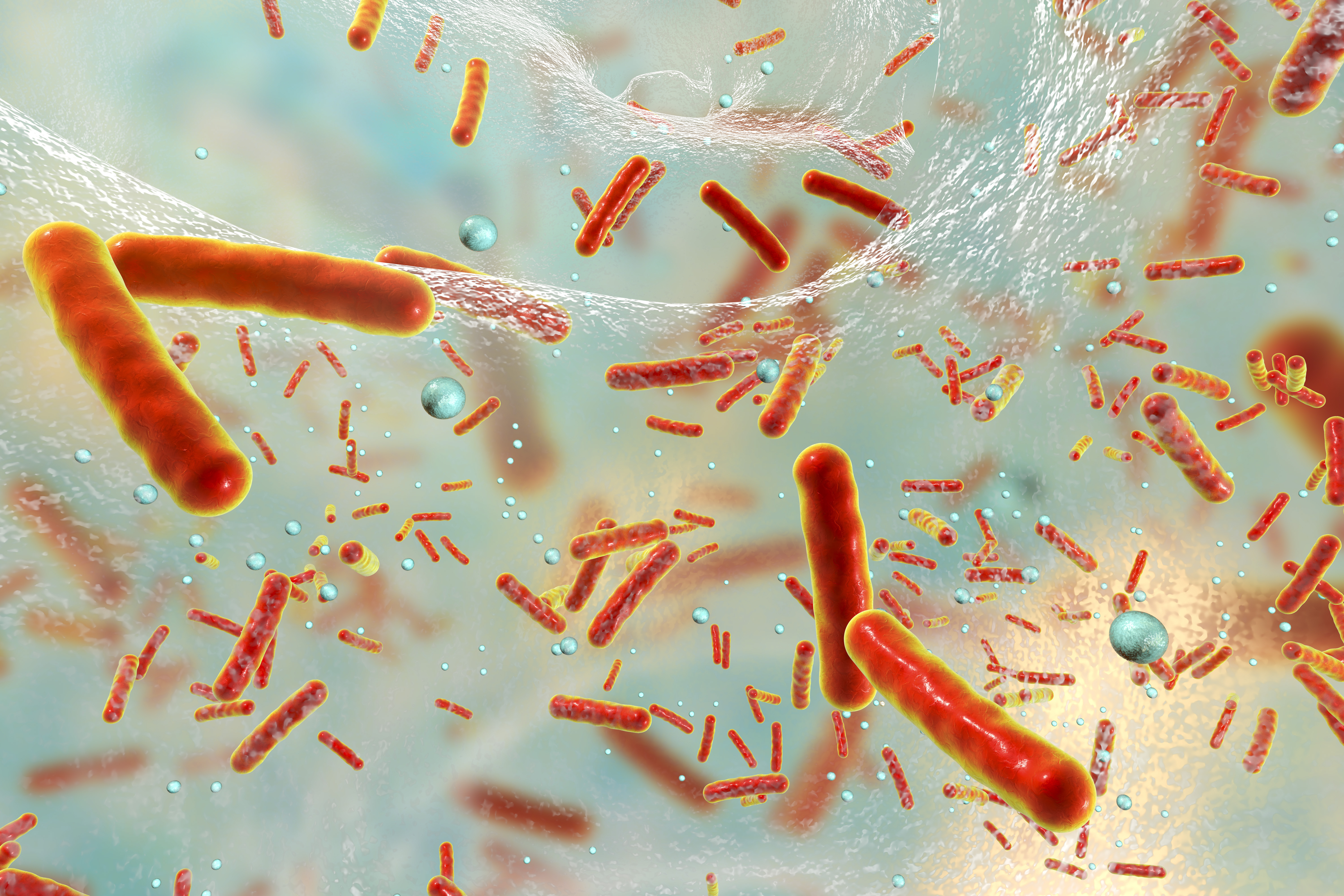
One bacteria like this which makes biofilms is P. aeruginosa, related to pneumonia and severe infections in cystic fibrosis. Previous attempts to treat P. aeruginosa biofilms using antibiotics have been largely unsuccessful, leaving few treatment options available for patients who already have a weakened immune system.
A recent research study carried out by Mazzolini and colleagues focussed on using another bacteria called M. pneumoniae to fight P. aeruginosa biofilms. The researchers selected M. pneumoniae because it is responsive to antibiotics and easy to genetically modify.
What did the research find?
In their research published in Nature Biotechnology, the authors successfully reprogram M. pneumoniae giving it the ability to breakdown and kill P. aeruginosa biofilms without M. pneumoniae causing infection itself. This was completed through two steps;
Step 1: They removed genes in M. pneumoniae capable of causing disease, creating a weakened strain suitable for use.
Step 2: They added new genes to this M. pneumoniae strain making it capable of dissolving P. aeruginosa biofilms and then killing it once the biofilm was broken down.
How was this research covered in the media?
This research was featured in an article from The Guardian titled “GM bacteria could combat antibiotic resistance, study suggests”. The article provides a good summary of the research and is well explained with input from the senior author of the study. However, the article headline is slightly misleading because the reprogrammed M. pneumoniae cannot make bacteria that are resistant to antibiotics responsive to them again. The reprogrammed M. pneumoniae provides an alternative treatment option for P. aeruginosa biofilms, but does not make existing antibiotic resistant bacteria any more responsive to antibiotics.
What will happen with this research in the future?
Taken together, this research provides firm evidence that using a genetically reprogrammed bacteria to treat P. aeruginosa biofilms may be an effective option for respiratory tract infections. However, it is worth stating that this research was performed largely in mice, and whilst the data seem promising, a major challenge will be the transition into human infections, which can take more than ten years to get from discovery to market.

Written by Sophie Hoetzel, public engagement masters student, University of Edinburgh and Dr Esther Papies, School of Psychology and Neuroscience, University of Glasgow.
New diet plans and information about how to lose weight seem to appear weekly. However, there is no ‘one size fits all’ advice. Nutrition is complex; numerous factors like our genes, physiology, psychology, and lifestyle affect our food habits and how food affects our health. Nevertheless, or potentially because of this, there seems to be a desperate need for an easy solution. The media frequently reports about new pieces of nutritional research, and the different ways media outlets write about them can be confusing and contradicting.
A study recently published by Leonie Ruddick-Collins and colleagues in Cell Metabolism looked at the impact of eating times on weight loss in otherwise healthy obese people. More specifically, the aim was to see if consuming most calories (45%) for breakfast would lead to a greater weight loss compared to eating most calories at dinner (morning-loaded vs evening-loaded). They found that the timing did not affect the participants’ metabolism or the number of calories burned throughout the day. No significant weight loss difference was evident between the big breakfast group and big dinner group. However, the timing did affect certain hormones, including the ‘hunger hormone’ ghrelin. The big breakfast group had lower ghrelin levels and felt lower appetite (i.e. less hungry) during the day compared to the big dinner group. As participants only ate the food provided by the researchers, neither of the groups snacked, whilst in the ‘real world’, more appetite could have led to more snacking.
How did the media cover this research?
The Daily Mail titled their article: ‘Why eating ‘breakfast like a king’ might not help you lose weight: Age-old diet advice to consume bulk of calories in morning does not help you burn more calories, study finds’. It suggests the time of calorie consumption is not linked to weight loss in anyway, whilst the title of an article by The Sun claims the opposite: ‘GO LARGE Best time to eat the biggest meal of the day when trying to lose weight revealed by health experts’. Interestingly, both articles explained the original study and summarised its findings well. However, the ‘health experts’ The Sun referred to in their title were not the study’s researchers, but rather Dr. Mosley, a former doctor and now TV presenter. He expressed his surprise at the result as he compared it to the previous Tel Aviv University study with different results. The study was carried out in a less controlled setting with participants with raised blood sugar levels as opposed to healthy individuals. Their participants lost more weight after eating big breakfasts. However, a less controlled setting meant participants could snack during the day. Other differences included the original study being significantly shorter, but it assessed energy expenditure (calories burned) more accurately. So, differences in the results are not surprising. Nevertheless, both studies showed a decrease in appetite after a big breakfast, which can potentially help weight loss.
Finally, the BBC found a straight-forward and clear way to summarise a key finding of the study: ‘Bigger breakfasts better for controlling appetite, study suggests’. Taken together, research suggests that people could potentially lose weight by eating big breakfasts due to behavioural changes as a result of reduced appetite (e.g. less snacking). However, the new study found no association between eating times and calories burned. It is important to remember that nutrition is complex; everybody is different, and what works best for one person does not necessarily work for another.

Written by Shivane Chawla, public engagement masters student, University of Edinburgh and Dr Joanne Ingram, Senior lecturer, University of West Scotland.
The COVID-19 pandemic has widened health inequalities including those in mental health. For example, people with poor mental health tend to have physical health problems like high blood pressure, asthma, cancer, epilepsy or asthma. New research shows that people with poorer mental health are more likely to develop long COVID, adding to their already too large number of physical conditions.
What did the research find?
A recent Harvard research study, consisting mostly of women participants, looked to see if psychological distress (depression, anxiety, loneliness, stress, or worry) before a COVID infection was associated with a risk of having COVID symptoms for more than 4 weeks. This extended timeframe is referred to as “Long COVID”, where several common symptoms include extreme fatigue, shortness of breath and a loss of smell. The study followed 3193 people over a one-year period. The participants were given several self-assessment surveys, one on their baseline level of distress before contracting COVID and then at monthly and quarterly timepoints to assess the rates of COVID infection and on-going symptoms. They found that previous psychological distress, experienced before COVID infection, but during the pandemic (April to September 2020), was associated with increased risk of long COVID conditions.
How was this study covered in the media?
The Guardian article title “Study Finds Link Between Poor mental health and long COVID” title conveys the research in a way that could be misleading. Firstly, many readers would also think the link between mental health and long COVID would go the other way; that long COVID leads to mental health problems. So, those who only read the headline might have completely misunderstood the findings. Secondly, using the term “mental health” suggests that clinical conditions have been measured i.e. does a person have a diagnosis of depression or not? Whereas, people only answered basic distress questionnaire. The sub-title clarifies this point well, ‘High levels of distress before coronavirus infection raises risk of long COVID, say Harvard researchers.’
Later in the article, clearer distinction is made between what has been found versus potential interpretations. For example, the article’s authors explicitly note that “The findings do not mean that mental health issues cause long COVID: more than 40% of those who developed long COVID in the study had no signs of distress before infection.” It is that poor mental health in the early stages of the pandemic puts a person at higher risk for developing long COVID. Chronic stress can weaken the immune system and make a person vulnerable to long COVID. The Guardian places the study in the wider context by explaining this point well by noting that stress has been linked to a greater susceptibility to common colds and other respiratory tract infections.

Written by Rebecca Sharland, Science Communication and Public Engagement Masters student at the University of Edinburgh and Dr Michael Byrne, leader of the Climate Dynamics Lab at the University of St Andrews.
COP27 is taking place this week in Sharm el-Sheikh, Egypt. High on the agenda will be issues surrounding the Paris Agreement and discussions on how nations can work together to keep the global temperature rise below 1.5°C – a significant change given that the Earth has already warmed by 1.1°C and could reach 1.5°C as soon as the 2030s.
What did the study show and what are climate tipping points?
Climate tipping points occur when changes in large parts of the climate system become self-perpetuating beyond a warming threshold and result in irreversible alterations to the Earth system, for example collapsing ice sheets causing sea level rise.
A recent study in Science has re-evaluated climate tipping points (see some examples in the table below) and the global warming thresholds at which they are likely to be triggered. Some of tipping points assessed were global, affecting the overall operation of the Earth system (e.g., major ice sheet collapses or the Amazon rainforest turning to desert); while others were more regional affecting human welfare or unique features of the Earth system (e.g., coral bleaching in the Great Barrier Reef).
| Natural Earth Feature | Tipping point outcome |
| Global | |
| Greenland Ice Sheet | Collapse |
| West Antarctic Ice Sheet | Collapse |
| Labrador-Irminger Seas/SPG Convection | Collapse |
| East Antarctic Subglacial Basins | Collapse |
| Amazon Rainforest | Dieback (i.e. turn to desert) |
| Boreal Permafrost | Collapse |
| Atlantic M.O. Circulation | Collapse |
| Arctic Winter Sea Ice | Collapse |
| East Antarctic Ice Sheet | Collapse |
| Regional | |
| Low-latitude Coral Reefs | Die off |
| Boreal Permafrost | Abrupt thaw |
| Barents Sea Ice | Abrupt loss |
| Mountain Glaciers | Loss |
| Sahel and W. African Monsoon | Greening |
| Boreal Forest | Southern dieback |
| Boreal Forest | Northern expansion |

As we approach the minimum temperatures at which these tipping points may occur, the question arises about the accuracy of the estimated thresholds (based on climate modelling) and whether some of these have already been surpassed.
The paper states that we must stay on track with the Paris agreement, and push to keep global warming below the 1.5°C target as the threat of activating tipping points increases for every fraction of a degree of warming. They warn that the Earth may already have passed beyond a safe state with our current 1.1 degree celsius of warming above pre-industrial levels.

What did the media report?
The Guardian published an article titled “World on brink of five ‘disastrous’ climate tipping points, study finds” based on the above study.
Initially, the article takes a very alarmist approach. The word ‘disastrous’ is not used in the research study itself and the temperatures at which the final six tipping points could be triggered are exaggerated (the article states that they will occur anywhere above 2°C, however many of the thresholds are around 4°C with some are as high as 7.5°C).
However, the article contains interviews with members of the research team who highlight both the dangers of triggering these tipping points and their hope for prevention. Several researchers also mention uncertainty around the global warming thresholds at which these tipping points will be triggered and the urgent need for further investigation.
Disappointingly, the key message from the original research study, that we must strive to meet the terms of the Paris Agreement, is somewhat lost in this news article. It is only mentioned briefly as a quote from an interview and is not highlighted by the journalist.
What next?
It is important to raise awareness of the dangers posed by global warming; The Guardian article does this well, emphasising how disastrous passing these global tipping points would be. Nevertheless, it is also necessary to highlight the preventable nature of these changes, the amount of further research required and the substantial uncertainty involved in trying to predict if and when these tipping points will be crossed. We are at a very critical point with global warming where we must aim to minimise increases in the Earth’s temperature; if and how we are going to do this will be key questions during COP27 discussions this month.

Written by Dr Sinead Rhodes (Senior Research Fellow) and Ailbhe McKinney (PhD researcher), University of Edinburgh
The last post I wrote about the representation of ADHD in the media highlighted clear improvements with coverage of this neurodivergent condition over the last couple of decades. It is then extremely disappointing to see a new post in the media that mocks the condition. The article is so bad that I am really hoping it is withdrawn and the media source learns a stern lesson from responses like this as I am assuming people with ADHD will be highly offended by it.
We have written a lot on Research the Headlines about sensationalist or misleading headlines but this one definitely tops all of them – ‘I may not be a doctor….but I’m almost certain you have ADHD: Welcome to the new stage of your life, where everyone seems to have the same neurological condition’. Even more concerning is that the headline matches the full article. We often post about ‘Don’t stop at the headline’ as the article is usually informative with the headline acting as click bait. In this case though, the ridicule continues throughout the article. This is very disheartening to see this for what is a clinically diagnosed condition that can cause those affected significant difficulties in everyday life.
Ironically, I clicked on this post as I was waiting on some final information to press submit on a grant application I have been writing to fund a study to ensure more appropriate assessment of mental health in neurodivergent young people. To read an article that refers to ‘the ever increasing explosion in adult ADHD diagnoses’ at a time when we know that ADHD is still massively under-diagnosed is frankly alarming. ADHD is under – not over- diagnosed (at least in the UK where this article was published). Many of those who have not been diagnosed, for whatever reason, typically have significant difficulties in how they function. This often extends to their mental health. Also, the article claims receiving a ADHD diagnosis can be achieved with “stunning ease” yet, in Scotland (and the UK), waiting lists for neurodevelopment condition assessment are lengthy, typically 18 months upwards with some children waiting up to 3 years (Crane et al., 2018), see for example NHS Tayside but has been up to seven years for adults.
Children and adults who are neurodivergent, including those with ADHD, have a much higher risk of mental health difficulties than their peers. They also show these difficulties much earlier in life – often in childhood. Mocking the usefulness of a diagnosis and the process is simply appalling. We know that psychoeducation – understanding a condition you may have – is extremely important for positive outcomes. This is indeed recognised in the NICE (National Institute for Health and Care Excellence) guidelines (NICE, 2018) where understanding ADHD is recommended within the treatment plan for those with ADHD.
It is difficult to read this article and not get the impression that the author thinks this will come across as some kind of banter – the whole piece is written as if it was to be interpreted as a joke. They even refer to the outcome of their assessment as ‘plus this way I get drugs!’ We know that for many young people and adults with ADHD stimulant medication can be a lifeline – it can facilitate them to stop and think and plan and remember what they need to do in any given situation. Coupled with appropriate supports within their environment – whether they are a child at home or school or an adult in employment – it can be an extremely important component of navigating their day in what many with ADHD perceive as a ‘neurotypical world’.
I would worry about someone who recently got an ADHD diagnosis coming across this article which belittles them. They may be at a point in their life where finally things are starting to make sense and may even be building the courage to tell friends, family, and co-workers. This article will then stop them in their tracks to do so and make them feel like a joke. They might think if I tell people I have ADHD they’ll just think I am a silly “ultra-online zillennial” looking for an excuse to not to work. After beginning to realise why their life has been harder than everyone else’s, this article will invalidate the years of suffering they have endured, because, as the article says, it is ‘so commonplace’.
The most concerning part of the article was the reference to women undergoing ADHD assessment. The article refers to ‘the reassessment of who’s been chronically overlooked (read: women)’ in the context of describing the new world they think we live in of an ‘explosion of adult diagnoses’. My work has involved considerable engagement with girls and women with suspected ADHD –the non-diagnosis due to having been on a long waiting list, hiding their ADHD (called ‘masking’ or ‘camouflaging’), being overshadowed by depression, anxiety, or eating disorders or delays caused by looking a little different to males with ADHD in their behaviours. Not having a diagnosis – being misunderstood and the mental health consequences that often come with that – just because you are a woman is not a laughing matter. The consequences of not having a diagnosis when you are experiencing those difficulties can be devastating. Ailbhe McKinney, who is a PhD researcher working with me, has recently completed extensive work with female adolescents and adults with neurodivergent conditions about their priorities for research and the overwhelming response relates to wanting research to focus on masking and fitting in as these are thought to have a huge impact on mental health outcomes. Undermining the importance of diagnosis for women alongside a narrative about how easy it is to get a diagnosis is harmful and damaging to yes what quite frankly are a chronically overlooked group.
This blog post was written by Yuzhou Chen and Sinead Rhodes
Recent media coverage highlighted a study suggesting a possible link between fish consumption during pregnancy and a lower chance of autism-related outcomes, though other factors may explain the association. Headlines like “The food that can lower risk of AUTISM by 20% if eaten when pregnant, study finds” and “Eating this food during pregnancy may lower autism risk by 20%: study” have appeared in various outlets. But how accurate are these articles and do they reflect the scientific evidence?
Some media reports did a good job of citing the study’s data accurately, helping readers understand the significance of the findings. For example, the Hindustan Times mentioned that quantity of fish consumption appeared beneficial for fetal brain development and may reduce autism, aligning with recommendations for pregnant women to eat two to three servings of low-mercury fish per week. This supports existing dietary guidelines and offers reassurance to expectant mothers who may worry about fish due to mercury exposure. But these important details were not consistently communicated in some media articles.
Some articles misrepresented the study’s findings. The original research, published in The American Journal of Clinical Nutrition, analysed data from over 4,500 children in the U.S. and found that mothers who consumed fish during pregnancy had a 16% lower chance of having a child diagnosed with autism compared to those who did not eat fish. There is a discrepancy between the reported “20%” and the specific results of the study. This slight exaggeration is inaccurate and exaggerated which may mislead the public to have unrealistic expectations and wrong decision-making about health interventions.
The study found that prenatal fish intake was associated with a reduced likelihood of autism diagnosis. However, as highlighted in How to Research the Headlines, the findings only show an association, not causation which means that fish consumption may be linked to a reduced incidence of autism, which does not necessarily mean that eating fish reduces autism . There could be other factors at play. For instance, mothers who eat fish might also have access to better healthcare or healthier diets that benefit child development. There is likely genetic differences between mothers who eat different amounts of fish that are actually explaining increased autism. These other factors might actually be what’s driving the difference, not the fish itself—it’s like seeing a rise in ice cream sales alongside more sunburns. it’s not the ice cream causing sunburns but the sunny weather encouraging both.
In short, the real takeaway from the study is that prenatal fish consumption is associated with a reduced likelihood of autism diagnosis but more research is needed to better understand the potential co-factors and how they might affect the outcomes related to autism. In the meantime, adhering to existing dietary recommendations remains the best course of action. More information on the topic of pregnancy and autism can be found here.


 researchtheheadlines.org